


Plan around hurricane season
The Atlantic hurricane season runs from June 1 to November 30. If you move in those months, keep your dates a little flexible and ask each mover how it handles a storm delay.
Local, long-distance and cross-country moves
Global Elegance Moving and Logistics is based in Boca Raton, Florida. Describe your move once, and the 8 Top Movers moving team brings you free written estimates to compare. Nothing is booked until you say yes.
Quotes coordinated via 8 Top Movers
Global Elegance Moving and Logistics shares ownership with 8 Top Movers.
One request, any distance
Global Elegance Moving and Logistics handles all three kinds of move. Each one is priced differently, so here is what to expect from the estimate and what to get in writing.
Local
A move within South Florida, such as Boca Raton to Delray Beach or Fort Lauderdale.
Long-distance
A move that crosses a state line, like Boca Raton to Atlanta or Charlotte. Federal rules for interstate moves apply.
Cross-country
A move across the country, like South Florida to California or the Pacific Northwest.
About the company
Global Elegance Moving and Logistics is based in Boca Raton, Florida. Its federal record lists it as Global Elegance Moving & Logistics LLC, and it takes on local, long-distance and cross-country moves under its own tagline, “Your move, any distance.”
It describes itself as a household-goods carrier and broker. A carrier does the moving itself; a broker arranges the move with another licensed carrier. Ask which company will load the truck on your move, and check that company’s record too.
It is worth asking for an estimate if you are leaving South Florida for another state or the other coast, or moving locally and want every charge on paper before moving day.
How it works
One short form, a phone call about the details, then written estimates you can put side by side. Asking is free and never books a move.
Where you’re leaving, where you’re landing, roughly when, and how much there is. A minute, tops. No account.
Our moving team gets rates from the licensed movers in our network and asks each for a written estimate.
Read them side by side at the kitchen table. Pick one, or pick none. Nothing is booked until you say so.
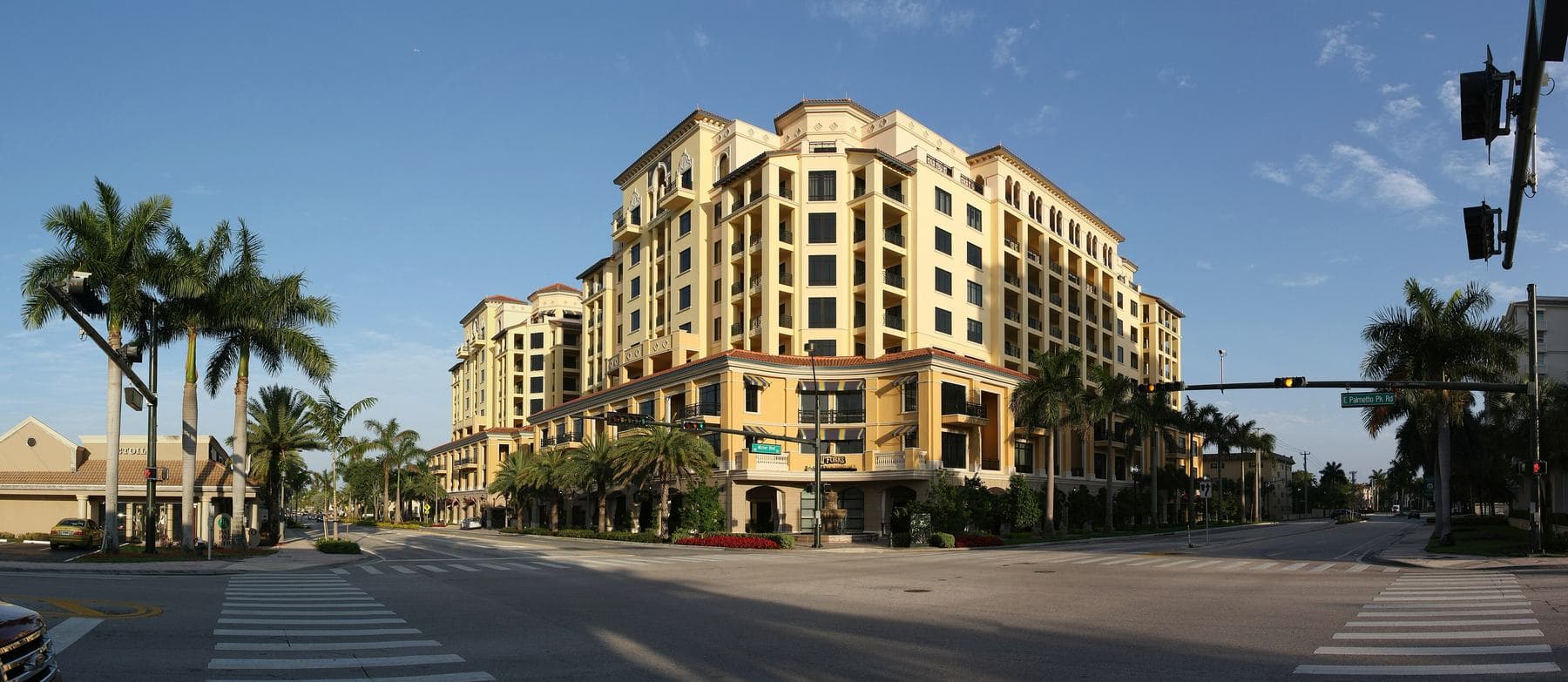
South Florida
Five things that shape a move in and out of Boca Raton and the rest of South Florida, and what to ask about each.
The Atlantic hurricane season runs from June 1 to November 30. If you move in those months, keep your dates a little flexible and ask each mover how it handles a storm delay.
Many condo and HOA buildings want a certificate of insurance from the mover, a reserved elevator, set move hours and sometimes a deposit. Get the rules from management and share them with every mover before they price the move.
Roughly October to April, many seasonal residents move between Florida and the Northeast and Midwest. Calendars on those routes fill up, so ask for estimates early.
Summer days are hot and afternoon thunderstorms are common, so start early. Pack electronics, photos and papers in sealed boxes or totes, and keep them out of a hot car.
For a move that starts and ends in Florida, state law requires the mover to be registered with the Florida Department of Agriculture and Consumer Services (FDACS). You can look up a registration on its website.
Google reviews
Google’s score for Global Elegance Moving and Logistics, with a few excerpts quoted exactly as written.
These are a few of the positive reviews Google listed on Sep 12, 2026, quoted as written. The full set, including critical reviews, is on Google.
Moving day felt much easier than expected. The team handled each step carefully. Large furniture was moved safely.
From the first phone call to the last box being put down Global Elegance Moving & Logistics was professional.
This company is one of the best companies that I have had in my experience moving. I am military so I move a lot and this is by far the best company they care about you belongings.
Read all 252 Google reviews for Global Elegance Moving and Logistics (opens in a new tab)
Before you book
Moving across state lines is federally regulated, and most of what protects you is public or printed on your own paperwork. These four checks take a few minutes.
Every mover we list shows its USDOT number. Look it up and see its operating status for yourself.
The FMCSA record shows whether a mover’s required insurance is on file. Check it before you sign.
Moves across state lines need federal household-goods authority. The FMCSA record shows it.
Get a written estimate you can hold and compare, not a number over the phone.
On the SAFER snapshot, check the operating authority status, then open the licensing and insurance details to see what insurance is on file. Make sure the name on your estimate matches the name on the record.
Questions
Straight answers about this company, South Florida moves and the federal rules for moving across state lines.
See the full list of movers on 8 Top Movers.
No. Our moving team gets rates from the licensed movers in our network and brings their written estimates to you. You compare them and choose a mover, or none at all. Nothing is booked until you agree to a move with the mover you pick and sign its paperwork.
You never pay us, and using 8 Top Movers does not raise your price. If your plans change or you decide to move yourself, you do not owe anyone anything for having asked.
Global Elegance Moving and Logistics shares ownership with 8 Top Movers, and it is one of the movers on our top choice list. Our moving team is run together with Global Elegance.
When you ask for estimates on this page, that team gets rates from the licensed movers in our network, which can include Global Elegance, and brings their written estimates to you. You compare them and choose a mover, or none at all. Asking does not commit you to Global Elegance or to any other company.
A household-goods carrier moves your belongings itself. A household-goods broker arranges the move with a licensed carrier that does the work. Global Elegance Moving and Logistics describes itself as both, so ask which role it plays on your move.
If a broker arranges it, ask for the name and USDOT number of the carrier that will load the truck, and look that company up on the FMCSA’s public SAFER record too. The bill of lading comes from the carrier, so check that the name on it matches the company you agreed to.
For a move across state lines, a binding estimate is a set price for the services it lists. You pay that amount, plus only services you add later. A non-binding estimate is the mover’s estimate of the cost, and the final bill is based on the actual weight and services.
On a non-binding estimate, federal rules say the mover cannot make you pay more than 110 percent of the estimate at delivery to get your belongings. Anything above that is billed afterwards, and you get at least 30 days to pay it. Local moves inside one state follow that state’s rules instead.
Interstate movers offer two levels of liability. Released Value costs nothing extra, but the mover is liable for only 60 cents per pound per article, so a 10-pound laptop is covered for about six dollars.
Full Value Protection costs more. Under it, the mover must repair the item, replace it, or pay its current replacement value. Movers can limit this for items worth more than 100 dollars per pound, such as jewelry or art, unless you list them in writing. Ask for the price of each option on the estimate and choose before moving day.
There is no perfect month, but two seasons shape the calendar. The Atlantic hurricane season runs from June 1 to November 30, and a storm can push a pickup or delivery back by a few days, so leave some room and keep important papers and medicine with you. Roughly October to April, seasonal residents move between Florida and the Northeast and Midwest, and movers on those routes get busy.
If a lease, a closing or a school start fixes your dates, say so when you ask for estimates, and get the pickup and delivery windows in writing. In summer, an early start beats the afternoon heat and storms.
Be careful with a mover that gives a firm price over the phone without seeing your belongings, asks for a large deposit or cash before the move, or wants you to sign blank or incomplete paperwork. Other warning signs are no written estimate, no copy of the federal booklet, and a company name on the paperwork that differs from the one you called.
An estimate far below the others is not a bargain if the final bill grows at delivery. Compare what each estimate includes, not only the total.
Search the mover’s USDOT number on FMCSA’s SAFER Company Snapshot. Check that the legal name matches your estimate, look at the operating authority status, and open the licensing and insurance details to see the insurance on file.
A mover handling a move across state lines needs federal household-goods authority. FMCSA also publishes consumer complaint information you can look through. It takes a few minutes, and it is the surest way to know who you are hiring, whichever company it is.
Tell us where you are moving from and to. The 8 Top Movers moving team brings back written estimates for you to compare, and nothing is booked until you choose.